

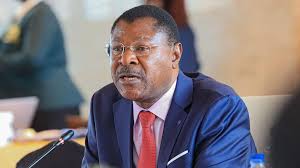
National Assembly Speaker Moses Wetang’ula has expressed strong confidence that projects launched by President William Ruto in Western Kenya will reach completion before the next general election. He delivered this message while addressing congregants at Holy Spirit Catholic Church in Bulimbo, Matungu Constituency, Kakamega County. Wetang’ula focused on funding, accountability, and political unity as the key drivers that will determine whether the region benefits fully from the ongoing development agenda.
Push for Strategic Budgeting
Wetang’ula urged Members of Parliament from Western Kenya to take the current budget-making process seriously. He challenged them to secure adequate allocations for projects that Ruto’s administration has already initiated. According to him, leaders cannot complain about stalled projects if they fail to fight for funding at the national level.
He made it clear that Parliament controls the power of the purse and that MPs must use that authority wisely. He insisted that development depends on numbers in the budget, not speeches at rallies. If leaders fail to allocate enough money, projects will stall. If they allocate sufficient funds, contractors will move faster and deliver results.
Wetang’ula framed the budget cycle as a decisive moment for the region. He urged MPs to unite around shared economic interests instead of engaging in petty political rivalries that weaken their bargaining power.
Revival of the Sugar Industry
The Speaker highlighted the revival of Mumias Sugar Factory and Nzoia Sugar Factory as major milestones for Western Kenya. These factories anchor the region’s economy. When they collapsed, thousands of farmers lost income and workers went home without salaries. Local businesses also suffered because the factories supported transporters, suppliers, and traders.
Wetang’ula credited President Ruto for intervening at a time when Mumias had completely shut down. He reminded residents that the President visited the area when operations had stopped and promised action. Today, the factory runs again, and farmers have regained hope.
He argued that reviving the sugar sector will restore dignity to cane farmers who endured years of uncertainty. He added that strong management, strict oversight, and consistent funding must follow the revival to prevent another collapse.
Roads, Markets and Housing
Wetang’ula also outlined infrastructure projects that target long-term economic growth. He pointed to the tarmacking of roads across Western Kenya as a practical step that will open rural areas to trade and investment. Better roads reduce transport costs, shorten travel time, and attract investors.
He mentioned the construction of modern markets that aim to provide traders with safer and more organized spaces. Traders form the backbone of many local economies, and improved market facilities increase productivity and hygiene standards.
The Speaker further highlighted hostel construction in public institutions under the Affordable Housing Programme. He explained that student accommodation improves learning conditions and stimulates local economies through job creation in construction and supply chains.
Wetang’ula emphasized that President Ruto has revived stalled projects and introduced new ones. He argued that Western Kenya now stands at a turning point and must protect the progress already made.
Appeal for Youth Responsibility
Wetang’ula shifted his focus to the youth and delivered a direct warning against political violence. He criticized the practice of paying young people to disrupt meetings or cause chaos. According to him, such actions destroy reputations and close doors to future opportunities.
He urged young people to demand jobs, skills training, and business support instead of short-term payments to fuel political tension. He insisted that meaningful engagement, not street battles, will secure their future.
Wetang’ula challenged leaders to create programs that empower youth economically. He maintained that development projects should translate into real jobs for young people in construction, agriculture, and service industries.
Leaders Rally Behind Ruto
Several leaders joined Wetang’ula at the church event and reinforced his message. President Ruto’s private aide Farouk Kibet urged the Luhya community to unite behind the President’s second-term bid. He argued that Ruto has demonstrated commitment to the region through visible development projects.
Senate Majority Whip Haroun Cheruiyot highlighted progress in the education sector. He stated that the Kenya Kwanza administration has employed more than 100,000 teachers in less than three years. He described the move as historic and positioned it as evidence of the government’s focus on strengthening public services.
Kakamega Governor Fernandes Barasa pointed to renewed construction work at Kakamega Level Six Hospital. He said the hospital will improve healthcare access for residents once contractors complete the remaining phases.
Other leaders present, including Bungoma Senator Wafula Wakoli, Likuyani MP Innocent Mugabe, and Matungu MP Oscar Nabulindo, echoed calls for unity and continuity. They framed the upcoming election as a choice between sustaining development momentum or risking stagnation.
Focus on Accountability and Delivery
Wetang’ula concluded with a firm reminder that promises alone do not build roads or revive factories. Leaders must track progress, question delays, and demand results from implementing agencies. He insisted that voters will judge leaders based on completed projects, not campaign slogans.
He positioned Western Kenya as a region with enormous economic potential. With agriculture, trade, education, and infrastructure all receiving attention, he argued that consistent leadership and disciplined budgeting can unlock lasting growth.
As the country moves closer to the next general election, Wetang’ula and his allies have chosen development as their central message. They want residents to measure performance through visible projects and economic impact. Whether that strategy convinces voters will depend on how quickly contractors deliver results and how effectively leaders secure funding in the national budget.
About The Author
