
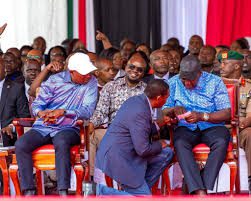
Cabinet Secretary Alfred Mutua clarified that a widely shared image falsely shows him kneeling before President Ruto. In an official statement, Mutua said the manipulated image is AI-generated, deliberately misleading, and entirely fabricated digitally.
He explained that the image falsely portrays him in a compromising situation that never occurred in reality. Mutua said the photo is circulating online to spread misinformation and create misunderstanding among Kenyans nationwide.
He emphasized that the image is not real and was artificially produced using advanced digital manipulation tools.
The Nature of the Manipulated Image
Mutua said AI-generated content has made it easier for false narratives to spread quickly and deceive the public. He clarified that the manipulated photo does not reflect any real interaction or event involving him and Ruto.
Mutua said the actual photographs from the same occasion show him standing beside the president normally. He added that social media platforms have amplified the manipulated image without verification or credible context.
Mutua said that AI-generated visuals often lack factual basis and can mislead even well-intentioned users.
He urged the public to avoid sharing the image until its authenticity is confirmed by reliable sources. Mutua said verification from reputable news outlets or official government channels is necessary before believing content.
He warned that unverified or sensational content spreads misinformation and can misinform the public unintentionally. Mutua explained that responsible social media use requires citizens to critically assess content before sharing online.
He said everyone must work together to reduce the rapid spread of digitally altered visuals in Kenya.
Verification and Responsible Sharing
Mutua said citizens should exercise caution and skepticism before assuming the authenticity of compelling images online. He emphasized that verification and cross-checking from official sources is the only responsible approach for citizens.
Mutua noted that digital misinformation threatens public understanding and can undermine trust in government communication. He stated that circulating fake images contributes to confusion and distracts from substantive public discussions.
Mutua said AI tools increasingly manipulate visuals and can deceptively alter reality without detection by casual observers. He explained that manipulated images require the public to remain vigilant before assuming visuals reflect real events.
Mutua said that failing to verify facts allows fabricated images to influence public opinion unjustly. He reiterated that AI-generated content requires higher levels of scrutiny to prevent misinterpretation or false narratives.
Mutua said digitally altered images of public officials create unnecessary controversy and distract from actual governance issues. He explained that sharing manipulated visuals without checking their source contributes directly to misinformation problems.
Educating Citizens on Misinformation
Mutua urged citizens to treat unverified material with skepticism rather than accepting it at face value. He emphasized that the correct response to false images is careful verification and cautious sharing.
Mutua said that reporting manipulated content to social media moderators is part of responsible online behavior. He explained that ordinary users must discern fact from fiction to avoid amplifying misinformation inadvertently.
Mutua said public figures face significant reputation risk when AI-generated images are circulated without context. He urged leaders, influencers, and citizens to encourage verification before publishing or sharing content online.
Mutua said that everyone has the power to either spread or curb misinformation depending on their actions. He reiterated that every sensational image should be verified before believing its narrative or sharing with others.
Mutua said public education on digital literacy is crucial to address the rising prevalence of manipulated content. He emphasized that responsible online behavior includes critically assessing content before believing or forwarding it.
The Call for Vigilance
Mutua explained that authorities monitor manipulated content to understand and prevent sources of misinformation in society. He said failing to verify digital content can quickly harm reputations and public trust across communities.
Mutua urged citizens to verify every photo and avoid accepting visually compelling content as truth without evidence. He said responsible verification habits would dramatically reduce the audience for fake images and harmful narratives.
Mutua clarified that the circulated kneeling photo is false, misleading, and fabricated using artificial intelligence. He emphasized that spreading unverified content contributes to digital misinformation and risks creating misunderstanding among the public.
Mutua concluded by reminding citizens that critical thinking and verification are essential in preventing misinformation proliferation. He said the public must recognize that AI tools are increasingly capable of producing entirely fabricated visual content.
Mutua stressed that all Kenyans share responsibility for ensuring content is accurate before reposting or resharing online. He said that only through verification and careful assessment can manipulated visuals be prevented from causing harm.
Final Reminder from CS Mutua
Mutua urged citizens to report suspicious content and consult official sources to confirm authenticity before engagement. He emphasized that careful assessment, fact-checking, and responsible sharing protect both reputations and public understanding.
Mutua concluded that the fake photo should be ignored, verified, and treated as entirely fabricated for clarity. He repeated that the image is false, misleading, and digitally manipulated using artificial intelligence technology.
Mutua said citizens must exercise prudence online, verify content, and avoid spreading information that cannot be confirmed. He explained that verification, responsible sharing, and digital literacy remain the only way to curb misinformation.
Mutua reiterated that social media users are responsible for preventing the spread of misleading content intentionally or accidentally. He concluded by emphasizing that only careful verification before sharing can stop false visuals from reaching wide audiences.
About The Author
