 Skip to content

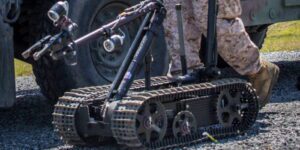
The Directorate of Criminal Investigations (DCI) has introduced a high-definition robot diffuser to combat terrorism. This technology was unveiled at the Eldoret International Show 2026 in Uasin Gishu County on March 3. DCI officers demonstrated the robot’s capabilities to enhance national security operations.
The robot diffuser is a critical tool for improving bomb disposal and handling potentially deadly explosives. As terrorism threats have increased, this advanced technology helps the DCI address these challenges and tackle local and international terrorism-related incidents.
How Explosive Ordnance Disposal (EOD) Robots Operate
EOD robots are controlled remotely by operators using joysticks, video screens, and radio signals. Operators can control these robots from hundreds of meters away, ensuring their safety. Real-time camera feeds and sensor data are transmitted back to operators, providing better situational awareness during bomb disposal operations.
The robots are designed for rough terrain, equipped with tank-like tracks that allow them to climb stairs and move through rubble. This ensures their effectiveness in various environments where human intervention might be dangerous.
Critical Features of the EOD Robot
The robot’s robotic arm can lift objects, cut wires, and use disruptor tools. The arm can also fire high-velocity water charges to destroy detonators without triggering the main explosive charge. This allows security officers to neutralize bomb threats without risking their lives.
The EOD robot features multiple camera systems, including infrared and zoom lenses, which help operators inspect suspicious packages and identify wiring on objects.
EOD robots vary in price, depending on their size, technology, and capabilities. Basic models cost between Ksh6.5 million and Ksh14 million. Mid-range units cost between Ksh14 million and Ksh32.5 million. Military-grade robots can range from Ksh33 million to Ksh70 million or more.
Rising Terrorism Threats in Kenya
Kenya faces increasing terrorism threats, particularly in Nairobi. The Anti-Terrorism Police Unit (ATPU) has intercepted several planned attacks, recovering firearms and explosives intended for use in the attacks. The DCI’s new technology will play a vital role in future operations, helping to mitigate terrorism risks.
Tensions in neighboring countries, such as Ethiopia and Sudan, have raised concerns about potential spillover effects. Sudan has accused Ethiopia of drone strikes in Sudanese territory, which could lead to further instability in East Africa.
Tensions between Iran, the U.S., and Israel, along with the ongoing Middle East conflict, could impact Kenya. The DCI’s adoption of advanced robotic technology is essential to safeguarding Kenyan citizens from potential terrorist threats linked to global security dynamics.
Enhancing National Security and Public Safety
By introducing the high-definition robot diffuser, the DCI strengthens Kenya’s defense against terrorism. The robot improves bomb disposal efficiency, minimizing risks to both officers and civilians.
This technology will help the DCI respond more swiftly to threats, providing a safer environment for citizens. The integration of robotics reflects Kenya’s commitment to addressing evolving terrorism-related challenges with modern solutions.
As threats to national security evolve, the DCI continues adapting its strategies and tools. The robot diffuser enhances Kenya’s security infrastructure, helping to safeguard public safety against future risks. The DCI remains committed to protecting Kenyans from terrorism while adopting innovative technologies for national security.
About The Author

