
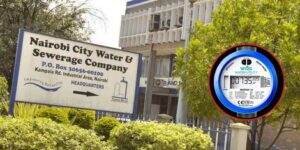
Nairobi City Water and Sewerage Company plans a major digital upgrade. The utility will install thousands of smart water meters citywide.
The project targets improved monitoring and reduced water losses. The plan appeared in the Kenya Gazette on February 27.
The Water Services Regulatory Board approved the rollout. Approval covers the 2025/2026 to 2028/2029 tariff period.
The project will cost Ksh2.57 billion. Consumers will fund the upgrade through revised tariffs.
How the Smart Meters Work
The new meters use ultrasonic technology.
They measure water flow using sound waves. Traditional meters rely on moving mechanical parts.
Ultrasonic meters avoid physical wear and tear. The device sends sound signals through flowing water.
It measures time differences between transmitted signals. The system calculates accurate consumption data instantly.
Ultrasonic meters perform better at low flow rates. Mechanical meters often underreport during low usage.
Each meter captures data in real time. The system transmits usage automatically to central servers.
Real-Time Data and Analytics
The meters use GSM, LoRaWAN, or NB-IoT networks. These networks deliver consumption data continuously.
The system feeds data into a central analytics platform. Engineers can monitor pressure across distribution lines.
The platform detects abnormal pressure fluctuations quickly. It identifies potential leak locations faster.
The analytics engine supports predictive maintenance planning. Teams can repair weak sections before failure occurs.
Cutting Non-Revenue Water
Nairobi currently loses 54 percent of treated water.
This loss results from leaks and illegal connections. Faulty meters also contribute to revenue gaps.
The company aims to reduce losses to 39 percent. Officials target this milestone by 2028/2029.
Inline ultrasonic meters will track bulk supply lines. These meters will monitor water flow across distribution networks.
Production plants will receive smart monitoring systems. Reservoirs will track treated water entering pipelines.
Managers will compare production data with billed consumption. Large discrepancies will trigger investigations immediately.
AI Leak Detection System
The company will integrate artificial intelligence tools. The AI system will analyze water flow patterns.
It will flag suspicious anomalies in real time. Engineers will receive alerts about abnormal usage trends.
The AI component carries a Ksh120 million budget. Implementation will occur during 2027/2028 and 2028/2029.
The system aims to improve operational efficiency. It will reduce manual inspection workloads significantly.
Phased Rollout Strategy
The rollout will begin with high-consumption customers. These users consume over 100 cubic metres monthly.
Large industries and commercial complexes fall under this category. The company expects quick revenue gains from this group.
The utility will expand installation to other consumers later. Officials have not released a detailed expansion timeline yet.
Introduction of Prepaid Water
The smart meters will support prepaid functionality. Customers will purchase water credit in advance.
The system will deduct usage automatically. Water supply will stop when credit runs out.
Customers must reload credit to restore service. This model mirrors prepaid electricity tokens.
The prepaid approach improves cash flow predictability. It also reduces debt accumulation for the utility.
However, critics may question affordability concerns. Low-income households could face service interruptions.
Financial and Operational Impact
The Ksh2.57 billion investment remains significant. Consumers will feel the impact through tariff adjustments. Smart meters alone will not fix structural pipe damage.
The company must enforce action against illegal connections. Data alone will not guarantee improved performance.
Management discipline will determine long-term success.
The modernization effort marks a bold strategic shift. The utility seeks a data-driven management system. Success depends on execution and transparency.
Failure could attract public scrutiny and criticism. Nairobi’s water sector now enters a critical reform phase.
About The Author
