

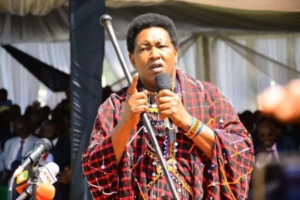
Ledama Olekina has challenged the real value of modern political rallies across Kenya. He argued that many rallies now function more as public entertainment than serious civic engagement.
He shared his criticism through a public post on X during a tense political period. He focused on the behavior, cost, and public disruption linked to large convoy rallies.
He pointed at long SUV convoys that block highways during weekend events. He said these movements delay travelers and interfere with normal economic activity.
He also highlighted loud music and crowded roads around rally venues. He warned that such environments create easy opportunities for petty crime.
Claims That Spectacle Replaces Substance
Olekina questioned whether rallies actually measure political strength in today’s environment. He suggested they show temporary excitement instead of durable voter support.
He argued that crowd size alone cannot prove ideological support or policy agreement. He said many attendees join for mood, music, or curiosity.
He asked whether leaders confuse noise and numbers with real influence. He warned that emotional moments often fade quickly after events end.
He noted that most attendees return to normal work routines the next day. He said that pattern weakens claims of lasting political dominance.
He framed rallies as short bursts of emotional energy. He contrasted that with structured debate and policy-driven persuasion.
He pushed leaders to prove strength through ideas and governance records. He said performance should outweigh spectacle in democratic competition.
Philosophical Criticism of Crowd Politics
Olekina supported his position using well known philosophical arguments about crowds. He referenced warnings from Plato about mass emotional decision making.
He said Plato warned that crowds often follow passion over reason. He used that idea to question rally-driven political momentum.
He also cited the writings of Friedrich Nietzsche on herd behavior and group psychology. He said Nietzsche criticized crowds that confuse unity with strength.
He connected those ideas to modern rally culture in Kenya. He suggested that leaders should avoid manipulating emotional crowds.
He argued that serious politics requires critical thinking and structured dialogue. He said slogans and chants cannot replace policy discussion.
He urged citizens to evaluate leaders using plans and results. He warned against blind loyalty driven by crowd emotion.
Kitengela Rally Disrupted by Police Action
His remarks appeared hours after chaos disrupted a rally in Kitengela town. The event involved allies of Edwin Sifuna under the Linda Mwananchi banner.
Police officers moved in and fired teargas to scatter the gathering. Officers also fired warning shots into the air during the operation.
Organizers linked the rally to opposition mobilization efforts in the region. The team included Embakasi East MP Babu Owino and other leaders.
Supporters gathered in large numbers along the Nairobi–Namanga road corridor. The crowd caused heavy traffic and business disruption.
Sifuna accused rivals of planning to sabotage opposition rallies. He said opponents turn to force when they lose political arguments.
He delivered that claim earlier during a church address before the rally. He framed the disruption as politically motivated interference.
After the clash, Sifuna thanked residents who attended despite tension. He said intimidation and harassment did not stop turnout.
He claimed unknown attackers destroyed the stage and sound equipment earlier. He blamed organized groups he described as state-backed actors.
He promised continued rallies despite police intervention and logistical setbacks. He told supporters that the movement would keep mobilizing publicly.
The incident added fuel to an already heated political climate. It also strengthened debate about the safety and value of mass rallies.
Growing Debate Over Future Campaign Methods
Olekina’s criticism has widened discussion about campaign strategy in Kenya. Some leaders defend rallies as core democratic expression tools.
Others now question their cost, safety risks, and practical political returns. They call for smaller forums and policy centered engagements.
Digital outreach, town halls, and structured debates offer alternative channels. These formats allow focused discussion without large scale disruption.
They also reduce security risk and public inconvenience during mobilization. Critics say leaders resist them because they limit spectacle.
The dispute now centers on effectiveness versus visibility in political work. Visibility brings attention, but effectiveness brings durable support.
Olekina’s position favors measured engagement over crowd driven momentum. He wants proof of influence beyond rally attendance numbers.
This argument will likely shape how future campaigns operate. Leaders must choose between spectacle politics and substance politics.
Voters will judge which method delivers real accountability and results. That choice will define the next phase of political competition.
About The Author
