 Skip to content

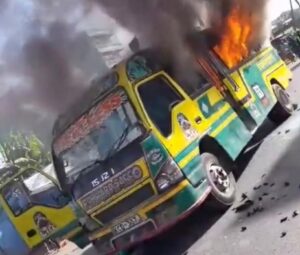
A gang of boda boda riders chased a matatu after a deadly crash along Juja Road. The vehicle headed toward the city centre when chaos erupted on Friday January twenty third morning.
Witnesses said the matatu struck a rider after another motorcycle collision threw him forward onto roadway. The rider died instantly, igniting fury among nearby riders who accused the driver of recklessness immediately.
Fearing retaliation, the driver sped away briefly before congestion forced him to stop ahead along road. Riders blocked the matatu moments later, prompting the driver to flee on foot for his safety.
An enraged crowd smashed windows, looted seats, and torched the vehicle as passengers escaped unharmed quickly. Police arrived after flames consumed the matatu, towing the charred wreckage to station for investigations later.
Officers moved the deceased rider to a mortuary pending autopsy and formal identification by family members. Authorities condemned the violence, warning that mob justice undermines safety and lawful accountability nationwide daily severely.
Investigators opened parallel probes into similar attacks targeting vehicles after fatal crashes across cities highways recently. The incident snarled traffic for hours, stranding commuters and disrupting businesses along Juja Road corridor badly.
Motorists groups blasted rising lawlessness, urging swift arrests and deterrent sentences for offenders nationwide immediately now. The Motorists Association cited repeated torchings, warning drivers increasingly fear vigilante reprisals after crashes daily nationwide.
Police records show five vehicles burned within three months following deadly roadway incidents across Kenya recently. Similar episodes unfolded in Nairobi, Nakuru, and Thika Road corridors, alarming communities commuters residents businesses alike.
Officers admit investigations progress slowly, hampered by fear, silence, and fleeting crowds after riots erupt suddenly. Police describe many boda boda riders as disorderly, aggressive, and resistant to traffic rules daily often.
Riders counter accusations, claiming systemic neglect, harassment, and dangerous driving by motorists within urban transport ecosystems. Still, unchecked retaliation escalates risks, punishing innocent passengers and destabilizing urban transport networks livelihoods trust confidence.
On Friday, roughly thirty passengers escaped safely before attackers overwhelmed the stranded matatu during evening rush. Eyewitnesses said pedestrians joined riders, amplifying destruction and prolonging mayhem until police intervention restored order partially.
Fire engulfed the bus rapidly, leaving twisted metal and ashes scattered across lanes during peak traffic. Authorities urge calm, stressing investigations and promising accountability without collective punishment against riders motorists communities nationwide.
Security agencies plan targeted patrols, intelligence mapping, and engagement with rider associations to curb violence decisively. Transport experts argue regulation, licensing, and training can reduce crashes and retaliatory attacks significantly sustainably nationwide.
They advocate visible enforcement, speed controls, helmets, insurance, and digital rider identification across cities highways routes. Critics say political patronage shields offenders, weakening deterrence and emboldening violent responses during roadside confrontations frequently.
Community leaders call dialogue urgent, emphasizing shared responsibility between riders, drivers, and regulators for safety outcomes. They warn normalization of arson erodes rule of law and economic stability for transport sectors nationwide.
Families of victims demand justice, compensation, and safer roads free from fear for commuters drivers riders. Insurers report mounting claims, predicting higher premiums and reduced coverage for public transport operators soon nationwide.
Business owners lament losses from delays, cancellations, and destroyed vehicles affecting supply chains jobs incomes confidence. Urban planners highlight congestion hotspots, urging redesigns, lighting, cameras, and emergency bays along corridors like Juja.
The Juja Road tragedy underscores urgency as tempers flare amid crowded, competitive streets across Nairobi daily. Witness accounts describe panic, screams, and frantic escapes as flames rose around stalled traffic lanes nearby.
Despite condemnation, arrests remain elusive, feeding perceptions of impunity and selective enforcement within transport policing systems. Police pledge renewed focus, asking witnesses to share footage and credible leads confidentially safely promptly today.
They insist accountability will follow evidence, rejecting collective blame against riders while targeting individual perpetrators firmly. Civil society demands timelines, transparency, and prosecutions to restore confidence among commuters investors operators regulators courts.
Meanwhile, commuters plead for protection during rush hours on volatile routes like Juja Road corridor daily. The Friday incident amplifies debates over safety, livelihoods, and accountability within Kenya’s informal transport economy today.
Experts caution simplistic blame, stressing multifaceted solutions combining enforcement, education, and infrastructure investments governance reforms coordination. Without action, copycat violence may spread, endangering lives and public trust across transport networks nationwide further.
Authorities urge reporting accidents promptly, preserving scenes, and allowing lawful processes to deliver justice fairly consistently. They remind riders violence invites harsher regulation, surveillance, and penalties threatening livelihoods freedoms trust earnings stability.
Drivers receive advice to slow down, yield, and prioritize vulnerable road users especially motorcyclists pedestrians cyclists. Passengers demand safer commuting, accountability, and an end to roadside terror during everyday journeys nationwide now.
Kenya confronts a reckoning, balancing informal transport growth with order and safety amid urbanization pressures intensifying. The Juja Road case should catalyze reforms before another vehicle burns amid crowds fear anger again.
About The Author

