 Skip to content

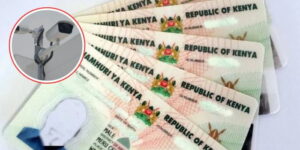
Interior Cabinet Secretary Kipchumba Murkomen has revealed plans to connect Kenya’s National Registration Bureau database with a new surveillance system to help police identify suspects faster.
Murkomen said the technology will allow security agencies to compare faces captured by CCTV cameras with photographs stored in government records. The system aims to strengthen investigations and improve crime detection.
Speaking during an interview on Monday, the CS said Kenya currently lacks a facial recognition database linked to official identity records. As a result, police cannot automatically identify suspects captured on surveillance footage.
“We do not have a database with facial recognition technology that already has the facial recognition for Kenyans,” Murkomen said. He noted that investigators currently rely on manual reviews of CCTV footage.
New Technology Under IC3 Upgrade
The government plans to integrate the technology into the Integrated Command, Control and Communication Centre (IC3). Authorities are already upgrading the centre as part of broader security reforms.
Murkomen said the system will gradually incorporate information from national identity records. Police officers will then use the technology to match CCTV images with official government data.
The project will cover Nairobi, Mombasa, Kisumu, Nakuru, Eldoret, and Nyeri. The government hopes the cameras will help curb crime and strengthen public security.
Murkomen said procurement is in its final stages. The government expects to complete the process within two months at a cost of up to Ksh25 billion.
Nairobi Set for Early Rollout
Nairobi will likely become one of the first cities to receive the technology. Authorities expect implementation to take between three and six months after procurement concludes.
The rollout forms part of the government’s wider plan to modernize security operations. Officials believe technology can improve response times and support criminal investigations.
Murkomen dismissed fears that the project could invade private spaces. He said authorities will only install surveillance cameras in public areas.
The CS stressed that the government will not place cameras inside homes, hotels, or other private premises. He maintained that the project targets public safety while respecting privacy rights.
About The Author

