

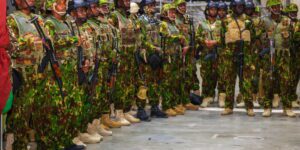
The Auditor-General Nancy Gathungu, has flagged unpaid police insurance claims amounting to KSh220 million, exposing prolonged failures in compensating families of officers killed or injured in the line of duty. The report shows that despite fulfilling all National Police Service requirements, many families have waited for years without receiving benefits meant to cushion them after devastating losses.
The findings have triggered scrutiny from the National Assembly’s Public Accounts Committee, which has summoned National Police Service leadership to explain the delays. Lawmakers questioned why legally binding insurance contracts have failed to deliver compensation long after families submitted valid claims.
The audit paints a grim picture of systemic neglect within the police welfare system. It shows that grieving families continue to suffer financial hardship even after complying with all documentation and notification procedures required by the insurer and the Service.
Although the National Police Service has processed and paid some claims, the report notes that a significant number of beneficiaries still await compensation. The Auditor-General questioned why the Service allowed delays to persist despite clear contract timelines governing claim settlements.
According to the insurance contract, the insurer must settle claims within five days after families submit all required documentation and notify the insurer. The audit found that this timeline exists only on paper, as families often wait up to three years for payments.
Lawmakers Question Contract Enforcement and Accountability
Members of the Public Accounts Committee sharply questioned National Police Service officials over the delays. Aldai MP and PAC member Mary Kitany demanded clear explanations on why the Service has failed to enforce the insurance contract.
Kitany challenged officials to explain why families continue to suffer despite the existence of a legally binding agreement. She questioned whether the National Police Service has taken any punitive action against the insurer for breaching contract terms.
Committee members argued that delays of several years cannot qualify as administrative hiccups. They stressed that such failures point to weak oversight, poor contract management, and lack of accountability within the Service.
NPS Blames Exchequer Funding Gaps for Delayed Premium Payments
Accounting Officer for the National Police Service, Bernice Lemedeket, attributed the delays to funding challenges from the national exchequer. She told the committee that the Service struggles to pay insurance premiums on time due to budget constraints.
Lemedeket explained that insurers cannot process claims fully when the government fails to remit premiums promptly. She argued that the problem starts at the funding level, not with the claims process itself.
She insisted that the insurer requires full premium payments to deliver comprehensive coverage. According to her, delays in funding disrupt the entire insurance arrangement and directly affect compensation timelines.
Members of the Public Accounts Committee rejected the funding explanation as inadequate. They argued that police insurance should rank as a priority expense given the risks officers face daily.
PAC Chairman Tindi Mwale questioned why compensation payments only moved after parliamentary pressure. He suggested that the National Police Service only acted because of committee scrutiny, not because of internal commitment to police welfare.
Mwale warned that failure to prioritise insurance premiums amounts to institutional negligence. He noted that police officers die or sustain life-altering injuries while protecting the public, yet their families face abandonment afterward.
Audit Shows Partial Settlements Amid Persistent Gaps
The November 2023 audit report showed that the National Police Service settled 97 cases worth KSh206 million. However, three cases valued at KSh6 million remained under processing at the time of the audit.
Lawmakers questioned why even a small number of cases could stall for months or years. They demanded timelines for clearing outstanding claims and asked for proof of follow-up with the insurer.
PAC members also sought clarity on whether the Service maintains an updated database of pending claims. They warned that poor record-keeping worsens delays and allows families to fall through the cracks.
Families affected by delayed compensation have described years of financial struggle after losing breadwinners. Many depend on insurance payouts to pay school fees, medical bills, rent, and basic living expenses.
Without timely compensation, widows and dependents often fall into debt. Some families report selling property or withdrawing children from school while waiting for payments promised by the government.
Lawmakers noted that delays deepen trauma and compound grief. They argued that compensation should provide immediate relief, not prolonged suffering.
Legal and Constitutional Entitlement to Police Insurance
Kenya Police officers serve as constitutional officers under the National Police Service Act. The Constitution establishes the National Police Service under Article 243 as part of Kenya’s National Security Organs.
This status entitles officers to government-backed insurance benefits similar to those enjoyed by other public servants. The law recognises the unique risks officers face while maintaining law and order across the country.
The Service’s welfare framework includes life insurance, work injury benefits, and comprehensive healthcare support through the Social Health Authority system. These benefits aim to protect officers and their families against occupational hazards.
Despite clear legal provisions, lawmakers say a wide gap exists between policy and actual implementation. They argued that welfare policies lose meaning when families cannot access benefits promptly.
Committee members warned that failure to honour insurance obligations undermines morale within the police service. They cautioned that officers who see colleagues’ families suffer may lose trust in institutional promises.
The PAC urged the National Police Service to restructure its insurance management framework. Members called for strict enforcement of contracts, timely premium payments, and regular audits of welfare schemes.
Call for Reforms and Timelines
The committee directed the National Police Service to submit a detailed report outlining pending claims, payment timelines, and funding plans. Lawmakers demanded clear accountability mechanisms to prevent future delays.
They also called for engagement with the Treasury to ring-fence insurance premiums as a protected budget item. Members argued that police welfare should never depend on discretionary funding.
As scrutiny intensifies, the fate of police families now hinges on whether promises translate into action. The PAC warned that it will continue monitoring the issue until every eligible family receives compensation owed to them.
About The Author
