

President William Ruto has announced that the government is drafting a law making drug-related offences a capital crime. He explained that the legislation is intended to intensify efforts against narcotics and illicit alcohol nationwide.
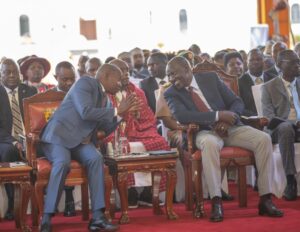
Speaking during an engagement ceremony in Uasin Gishu County on Saturday, January 3, the Head of State defended his tough stance. He added that he is ready to face any consequences arising from the push for stricter laws.
The President said the proposed legislation will specifically target individuals involved in selling illicit alcohol and hard drugs. He argued that existing penalties have failed to deter traffickers, leaving families and communities exposed to ongoing harm.
Ruto explained that current laws allow those caught selling substances such as heroin to pay a fine of Ksh1 million. He stated that the new law would scrap this provision and introduce the death penalty for offenders.
“For all these people who are involved in the illicit alcohol trade, we are going to change the law,” Ruto said. He explained that offenders will now face hanging instead of paying a fine.
“You know that if I have said it, I have said it, and I am ready to deal with the consequences,” he continued. “We need to have order because so many families are suffering from cocaine and other drugs.”
The President added that the proposed law, which will be tabled in Parliament, will allow the state to confiscate assets linked to illicit alcohol and drug sales. This includes vehicles, property, and other wealth acquired through proceeds of the illegal trade.
Ruto called on Members of Parliament to support the legislation, noting that approximately five million Kenyans are affected by drug abuse. He argued that this represents an unsustainable crisis that demands urgent intervention.
Strengthened Anti-Narcotics Enforcement
The announcement comes days after Ruto revealed plans to establish a new police unit within the Directorate of Criminal Investigations. He said this unit would form part of renewed efforts to target substance consumption and the financial networks behind the trade.
During his New Year address at Eldoret State Lodge on December 31, the President explained that the government would set up a strengthened Anti-Narcotics Unit within the DCI. He stated that the unit will operate similarly to the elite Anti-Terrorism Police Unit with advanced paramilitary capabilities.
Ruto said officers assigned to the new unit will undergo advanced training in paramilitary tactics and investigative techniques. He explained that this will equip them to target organised and high-risk criminal groups effectively.
The President emphasised that the new unit will not replace the National Authority for the Campaign Against Alcohol and Drug Abuse. Instead, he said, it will complement NACADA as a fully resourced and permanent formation.
The unit will be equipped with modern surveillance, intelligence, forensic, and financial investigation tools. Ruto added that this will enable the ANU to function as a multi-agency team working closely with NACADA.
Rationale for Tougher Penalties
Ruto argued that harsher penalties are necessary to curb the spread of narcotics and protect families nationwide. He stressed that current fines have not discouraged illegal sales of heroin, cocaine, and illicit alcohol.
He noted that traffickers continue to operate with minimal risk while communities suffer long-term social and economic consequences. The President said the government will take decisive measures to restore law and order effectively.
The proposed law aims to send a strong deterrent message to offenders engaging in the sale of hard drugs. Ruto explained that criminal networks making profits from illicit substances must face full consequences.
He stressed that implementing the death penalty and asset confiscation will disrupt the financial incentives behind drug trafficking. This, he added, will weaken organised criminal networks operating across the country.
The President urged parliamentarians to act swiftly and pass the legislation without delays. He warned that any procrastination will prolong the suffering of millions affected by substance abuse.
Comprehensive Approach to Drug Control
Ruto highlighted that the ANU and NACADA will work together to target high-risk offenders and dismantle criminal networks. He explained that the unit will combine intelligence, surveillance, and forensic investigation to fight organised substance abuse efficiently.
The President emphasised that officers in the ANU will receive ongoing specialised training in advanced paramilitary and investigative techniques. This ensures the team can operate effectively under challenging conditions and respond to evolving criminal strategies.
He explained that the new unit will focus on both supply and financial enablers of the drug trade. Ruto stated that tackling illicit revenue streams is critical to curbing widespread substance abuse.
The ANU will be equipped with cutting-edge tools to detect, monitor, and investigate criminal activities linked to narcotics. Ruto added that the unit will operate permanently and coordinate closely with other law enforcement agencies.
The President concluded by reiterating the government’s commitment to protecting families from the harms of drugs and illicit alcohol. He warned that the proposed law and strengthened enforcement measures will be implemented firmly, ensuring offenders face full consequences.
About The Author
