

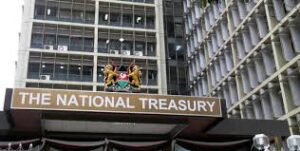
The National Treasury has set a Sh2.9 trillion revenue collection target for the Kenya Revenue Authority this financial year. The target ranks among the highest ever assigned to the tax agency in Kenya’s fiscal history.
Treasury officials say the target anchors the government’s broader plan to fund spending while limiting new borrowing. Revenue mobilisation now sits at the centre of fiscal planning as debt obligations continue rising.
The Sh2.9 trillion goal reflects Treasury’s expectations of stronger tax administration and improved compliance across sectors. It also signals reduced dependence on external financing amid tighter global credit conditions.
Government planners view domestic revenue as the most reliable funding source for recurrent and development expenditure. The target therefore carries major implications for budget execution and fiscal stability.
Revenue Composition and Key Tax Streams
Income taxes are expected to deliver the largest share of the Sh2.9 trillion target. These include Pay As You Earn, corporation tax, and withholding taxes from various economic activities.
Value Added Tax will remain a critical pillar of revenue collection throughout the financial year. Treasury projections assume stable consumption patterns and improved VAT compliance from registered businesses.
Customs and border taxes are also projected to contribute significantly to overall collections. Treasury expects enhanced surveillance and trade monitoring to curb smuggling and under-declaration.
Excise duty collections are forecast to rise modestly during the period. The government continues to rely on excise from fuel, alcohol, tobacco, and betting activities.
Economic Context Behind the Target
The revenue target has been set against a backdrop of economic strain and subdued growth. High living costs have weakened consumer spending and squeezed household disposable incomes.
Businesses continue to face elevated operating costs driven by energy prices, taxes, and financing constraints. These pressures have affected profitability and, by extension, tax remittances.
Treasury nonetheless maintains that economic activity will gradually improve during the year. The target assumes modest recovery across agriculture, manufacturing, and services.
Analysts note that revenue projections hinge heavily on macroeconomic performance and policy consistency. Any prolonged slowdown could place the target beyond reach.
KRA Enforcement and Compliance Strategy
KRA plans to rely on enforcement and compliance improvements to support revenue growth. The authority has expanded data integration across banks, mobile money platforms, and government agencies.
Digital systems now play a central role in detecting non-compliance and under-reporting. Treasury believes technology-driven oversight will close long-standing revenue leakages.
Audits and investigations have intensified in sectors considered high risk. These include construction, real estate, informal trade, and cross-border commerce.
KRA has also increased focus on large taxpayers who account for a disproportionate share of revenue. Treasury views improved performance in this segment as essential to meeting the target.
Fiscal Pressure and Budget Implications
The Sh2.9 trillion target directly underpins the national budget approved by Parliament. Failure to meet the goal could widen the fiscal deficit significantly.
Treasury has limited room to increase borrowing without worsening debt sustainability indicators. Revenue shortfalls therefore pose immediate financing challenges.
Debt servicing already consumes a large share of ordinary revenue. Higher collections are seen as necessary to protect spending on essential public services.
Development expenditure remains vulnerable when revenue performance disappoints. Past shortfalls have forced the government to cut or delay capital projects.
Public Reaction and Policy Sensitivity
Revenue targets remain politically sensitive due to their link with taxation measures. Recent public opposition to tax proposals has shaped Treasury’s cautious approach.
The government insists the Sh2.9 trillion target does not automatically translate into new taxes. Officials emphasise compliance and efficiency over rate increases.
Critics argue that enforcement-heavy strategies risk overburdening compliant taxpayers. They warn against aggressive collection practices during periods of weak economic growth.
Treasury counters that broadening the tax base remains the fairest approach. Informality and evasion continue to undermine equity within the tax system.
Expert Views on Feasibility
Economists describe the Sh2.9 trillion target as ambitious but not impossible. Much depends on quarterly performance and consistency in policy implementation.
Early underperformance could force mid-year revisions or spending adjustments. Treasury has previously revised targets after assessing actual collections.
Some analysts caution that expectations may still exceed realistic economic capacity. They highlight weak job creation and constrained private sector investment.
Others argue that efficiency gains at KRA could unlock significant additional revenue. They point to past improvements following administrative reforms.
Outlook for the Financial Year
KRA’s monthly and quarterly performance will face intense scrutiny throughout the year. Treasury will closely monitor trends across major tax heads.
Markets and development partners will also watch revenue outcomes closely. Tax performance influences confidence in Kenya’s fiscal consolidation path.
The Sh2.9 trillion target has therefore become a defining benchmark for the current financial year. Its achievement or failure will shape fiscal decisions ahead.
As pressure mounts, Treasury and KRA face limited margin for error. The coming months will test the balance between revenue ambition and economic reality.
About The Author
