
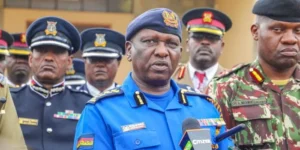
Inspector General of Police Douglas Kanja says police will arrest any governor who ignores a Senate summons. He issued the warning while appearing before the Senate Public Accounts Committee on February 12.
Kanja told senators that the Constitution gives the Senate clear authority to summon governors for accountability sessions. He said any governor who refuses to appear breaks constitutional duty.
He stated that the National Police Service will enforce Senate committee directives without hesitation. He added that political rank will not shield any governor from enforcement action.
YOU MAY LIKE: IG Kanja Issues Warning to Governors Who Ignore Senate Summons
Kanja explained that officers will act once a Senate committee sends a formal enforcement request. He said police teams will move quickly and bring the governor before the committee.
He stressed that summons carry legal force and demand compliance from every public official. He described them as binding orders, not optional invitations.
Kanja said officers will take non-compliant governors into custody and deliver them to answer audit queries. He noted that committees require direct responses on spending and accountability issues.
He extended the same warning to principal secretaries and other state officers. He said any official who skips a lawful summons without valid reason risks arrest.
Constitutional Duty and Accountability Enforcement
Kanja said the Constitution directs state agencies to cooperate closely on accountability matters. He noted that police and Parliament share responsibility in protecting public resources.
He told the committee that police will support every lawful oversight process involving county governments. He said enforcement units remain ready for such assignments. Kanja also addressed cases that involve suspected misuse of county funds. He said investigators will open active probes once committees flag financial irregularities.
He explained that detectives will gather bank records, approval trails, and payment documents. He added that officers will question accounting and procurement staff tied to flagged transactions.
Kanja said investigators will submit full files to prosecutors after evidence review. He noted that prosecutors will make charge decisions based on that evidence. He made it clear that police will pursue any governor who diverts or misuses county funds. He said facts and documentation will drive every case.
He rejected claims that police protect powerful political figures. He said the service follows law, procedure, and verifiable evidence. Kanja urged all public officers to respect oversight institutions and legal summons. He said cooperation strengthens governance and public confidence.
Governors Push Back Over Committee Conduct
His remarks followed rising tension between the Senate and the Council of Governors. The dispute centers on how some committees handle oversight hearings.
The Council of Governors recently announced plans to skip certain committee sessions. Council leaders accused some senators of intimidation and public humiliation.
They said several governors faced hostile questioning and personal attacks during hearings. They argued that such conduct weakens constructive oversight. Council members discussed these concerns during a governors’ retreat earlier this week. They reviewed reports from multiple Senate appearances.
They said some sessions turned confrontational instead of investigative. They called for structured and respectful engagement.
The council proposed a revised attendance model for governors. Members want one appearance per audit cycle instead of repeated summons.
They argued that this format will improve preparation and clarity. They also said it will reduce repeated questioning on the same audit items.
Governors insisted that they support audit review and financial accountability. They said they oppose hostile treatment, not oversight itself. They urged Senate committees to maintain order and professional conduct. They warned against turning hearings into political contests.
Senate Stands Firm as Police Reaffirm Enforcement Role
Kanja responded directly to the boycott position during the committee session. He said disagreement over tone does not remove legal obligation. He repeated that every governor must honor a Senate summons when issued. He said police will enforce compliance where defiance occurs.
He encouraged dialogue between governors and senators to reduce friction. He also urged both sides to follow constitutional frameworks. Committee members backed Kanja’s enforcement stance during the hearing. Several senators said some governors ignore summons without proper justification.
They argued that absence delays audit resolution and blocks financial oversight. They said public funds require strict supervision.
Senators noted that audit reports often show major spending gaps and unsupported figures. They insisted that governors must explain those gaps in person.
They rejected boycott threats and conditional attendance demands from county leaders. They maintained that the law requires appearance when summoned. Kanja clarified that police will act only after formal written committee instruction. He said enforcement teams will follow due process in every step.
He added that officers will plan operations carefully to avoid disorder or confrontation. He said the service prefers voluntary compliance over forced action.
He urged governors to attend hearings and respond to audit questions directly. He said cooperation protects institutions and speeds up accountability. Kanja concluded that firm oversight strengthens county governance and protects taxpayers. He said police will continue working with Parliament to enforce accountability laws.
About The Author
