

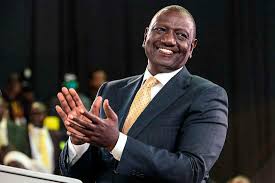
Mumias East Member of Parliament, Peter Salasya, called on President William Ruto to sell Kenya Pipeline Company, Safaricom, and other state assets, provocatively asking what would be next for sale.
He suggested that even Parliament buildings and State House could be put on the market, and sarcastically claimed that if this continued, Ruto would be remembered in a thousand years as the best deal-making president who sold the most valuable government assets.
In a social media post that has gone viral, Salasya reflected on recent government divestments, noting that “KPC is now gone, Safaricom on its way.”
His words were seen by many as a critique of what he describes as an aggressive privatization agenda that risks stripping the state of its most strategic resources.
Salasya raised eyebrows further by questioning the limits of the government’s asset sales. He provocatively asked what could be next for sale, implying that the current trajectory might extend beyond enterprises like KPC or Safaricom.
“What next to sell, Mr. President?” he wrote, signaling a public concern that the government could be prioritizing short-term financial gains over long-term national interests. Analysts point out that such statements echo widespread anxiety about the pace and transparency of privatization efforts.
The commentator did not shy away from hyperbole, suggesting that even the nation’s most symbolic institutions could be on the chopping block. According to Salasya, the sale could theoretically extend to the Parliament Buildings and State House, a remark that many interpreted as satirical yet pointed.
By framing it this way, Salasya highlighted a perception that the government’s approach to public assets is unchecked and could ultimately compromise Kenya’s heritage and sovereignty.
He went on to underscore his view that President Ruto might be remembered for these deals, sarcastically suggesting that history would regard him as a master negotiator.
“You are on the right trajectory; it’s your presidency; you will be remembered in 1,000 years to come as the best deal-making president who sold the best potential assets of government,” Salasya wrote. His commentary, while humorous, carries a sharp critique of prioritizing immediate revenue over strategic national control.
The post has triggered heated discussions online, with Kenyans debating whether privatization is being handled responsibly or recklessly.
Economists caution that while selling stakes in profitable enterprises can provide quick cash, it can also erode government influence in key sectors and reduce future revenue streams.
Salasya’s remarks, though delivered with satire, reflect deeper concerns about governance, transparency, and the long-term implications of selling critical state-owned assets.
By calling attention to these issues, Salasya has forced the nation to ask difficult questions: How far should Kenya go in divesting its public assets, and what will be left of national infrastructure and heritage if the sale of strategic enterprises continues unabated?
His post serves as both a warning and a provocation, compelling citizens and policymakers to consider the real cost of privatization beyond immediate financial gains.
About The Author
