

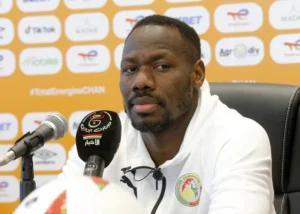
Senegal head coach Pape Thiaw publicly apologised after his team briefly walked off the pitch during the AFCON final. The dramatic protest followed a late penalty decision awarded to hosts Morocco, triggering chaos during the closing moments.
Thiaw admitted responsibility for instructing his players to leave the field after the referee awarded Morocco a stoppage-time penalty. He described his reaction as emotional, impulsive, and driven by frustration following a series of contentious officiating decisions.
“I apologise to football,” Thiaw said, acknowledging the seriousness of halting play during Africa’s biggest football showpiece. He accepted that his actions momentarily undermined the spirit of competition and respect for the game’s governing rules.
The incident occurred deep into stoppage time with the final still goalless and tension gripping the stadium. Morocco earned a penalty after a VAR review ruled that Senegal defender El Hadji Malick Diouf fouled Brahim Diaz.
Senegal players immediately surrounded the referee, voicing strong objections and protesting the decision aggressively. Moments later, Thiaw signalled his players toward the tunnel, effectively suspending play in open defiance.
The walk-off stunned fans, officials, and broadcasters, with uncertainty spreading rapidly across the stadium. Match organisers rushed to the sidelines while Moroccan players remained on the pitch awaiting further instructions.
After several tense minutes, Thiaw reconsidered his decision and instructed his players to return. He later explained that reflection, responsibility, and respect for football compelled him to reverse course.
“I regret asking my players to walk off the pitch,” Thiaw admitted during his post-match remarks. He acknowledged that leaders must exercise restraint, even when decisions feel unfair or emotionally charged.
Thiaw conceded that referees, like players and coaches, remain vulnerable to mistakes under extreme pressure. He stressed that accepting officiating decisions forms a core principle of professional football conduct.
“But we accept the referee’s mistakes,” Thiaw said, reinforcing his message of accountability and sportsmanship. He emphasised that disagreement should never escalate into actions that disrupt the integrity of competition.
The apology arrived after the match resumed and Morocco failed to convert the awarded penalty. Brahim Diaz attempted an audacious Panenka, but Senegal goalkeeper Edouard Mendy saved the effort brilliantly.
That save shifted momentum and restored Senegal’s composure after an emotionally volatile sequence. Extra time followed, allowing Senegal to refocus and regain tactical control of the contest.
Senegal eventually secured victory through Pape Gueye’s decisive extra-time strike. The goal crowned Senegal champions while simultaneously softening criticism surrounding the earlier walk-off.
Despite the victory, debate around the protest dominated post-match analysis and media discussion. Many observers argued the incident risked overshadowing Senegal’s tactical discipline and mental resilience.
Football analysts noted that such walk-offs place governing bodies in difficult disciplinary positions. CAF regulations permit sanctions when teams refuse to continue play, regardless of provocation or perceived injustice.
Former players and pundits expressed concern about the precedent such actions could establish across African football. They warned that emotional protests might encourage disorder if left unaddressed by officials.
However, several commentators praised Thiaw’s swift apology and willingness to accept responsibility publicly. They argued that leadership includes recognising errors and correcting them transparently.
Thiaw’s response contrasted sharply with previous incidents where coaches doubled down on confrontational behaviour. His admission helped de-escalate tensions and restored focus on the football rather than the controversy.
CAF officials have not yet announced whether disciplinary measures will follow the temporary walk-off. Sources suggest the governing body will consider Thiaw’s apology and the team’s return before final decisions.
The incident also reignited discussions about VAR implementation and consistency in high-stakes African matches. Critics argue that delayed decisions heighten emotional volatility, especially during finals with massive pressure.
Players from both teams endured intense scrutiny as cameras captured every reaction and exchange. Social media amplified the moment, spreading clips of the walk-off globally within minutes.
Thiaw acknowledged the broader responsibility coaches hold in shaping player behaviour during critical moments. He emphasised that football belongs to supporters, officials, and future generations, not individual emotions.
“We apologise to football,” Thiaw repeated, framing the incident as a lesson rather than a justification.
He called for reflection across the sport, urging calm leadership during moments of extreme tension.
The apology resonated with many Senegalese fans, who celebrated the title but criticised the protest.
Supporters praised the team’s resilience while urging discipline in future high-pressure encounters.
Ultimately, Senegal’s AFCON triumph now carries a complex narrative blending glory with controversy. The walk-off remains a cautionary episode within an otherwise historic championship campaign.
Thiaw’s handling of the aftermath may define his leadership legacy more than the protest itself. By admitting fault publicly, he reinforced accountability as a cornerstone of elite football management.
As African football continues to grow globally, such moments underscore the importance of composure. Success, controversy, and responsibility often collide at the highest level of the game.
About The Author
