

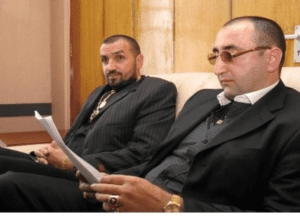
In late 2005, Kenya became the unlikely setting of one of its most bizarre and controversial security and media saga. Two foreign nationals, Artur Margaryan and Artur Sargasyan, arrived in Nairobi under circumstances that would soon shock the nation.
They entered Kenya on December 13, 2005, claiming to be investors and security consultants. Their presence initially drew little attention, but events that followed would unravel a complex tale of privilege, power, controversy, and eventual expulsion.
The men, widely known as the Artur brothers, were reportedly issued Kenyan passports and work permits soon after their arrival. This was highly unusual for foreigners arriving from Dubai without established business operations in Kenya.
Their rapid access to official documents and VIP privileges raised early suspicions, though the precise reasons behind these authorisations remained murky.
Once in Kenya, the brothers exhibited a flamboyant lifestyle. They lived in an upscale mansion in the Runda neighbourhood of Nairobi and arrived at social functions with luxury vehicles and VIP entourage.
They also managed to secure access to restricted facilities, including VIP areas at the Jomo Kenyatta International Airport (JKIA), access normally reserved for high-ranking officials.
Despite their outward image as businessmen, multiple reports soon uncovered significant gaps in their claimed credentials. Journalists and officials began questioning their backgrounds after allegations that their companies had registered with false documents and that they enjoyed police support not normally afforded to expatriates.
Rising Suspicion and Controversial Claims
Behind the scenes, claims emerged that the Artur brothers were more than investors. Some reports suggested they operated in areas connected to drug trafficking and money laundering, potentially linked to efforts to recover cocaine seized in Kenya worth millions of shillings.
A National Intelligence Service warning reportedly flagged them as dangerous and involved in illegal activities; however, this information was initially sidelined by some government officials who appeared to support the brothers’ activities.
The suspicions deepened when opposition leaders publicly questioned the government’s perceived protection of the brothers. They described the siblings as mercenaries and demanded transparency on their role.
Parliamentary inquiries later revealed that the brothers and their associates had used multiple identities with fake travel documents. They also reportedly registered several companies that benefited from massive tax exemptions and imported goods without appropriate checks.
The parliamentary report characterized their stay as fraught with criminality, false documentation, and exploitation of Kenyan systems meant for genuine investors.
The Raid on Standard Media Group
The turning point in the Artur saga came on March 2, 2006. In the dead of night, armed men raided the offices of The Standard Group PLC, one of Kenya’s oldest media houses, along with its sister station Kenya Television Network (KTN) in Nairobi’s Industrial Area.
The raid, which involved destruction of printing equipment, vandalism, and forced shutdowns of transmissions, shocked the nation. Equipment was dismantled, broadcast signals were cut, and staff were detained and intimidated. The raid was widely condemned as an assault on press freedom.
State authorities later admitted that the raid was ordered in response to rumours that the Standard was planning to publish stories linking high-level officials to drug trafficking scandals, stories that ultimately were never published.
The Artur brothers played a leading role in coordinating the operation, allegedly under the direction of powerful political backers.
Internal Security Minister John Michuki justified the action in a public statement, using the phrase, “If you rattle a snake, it will bite you,” in defence of the operation. The justification did little to temper public outrage, and the raid sparked intense criticism from journalists, opposition politicians, and civil society groups.
Escalation and Airport Confrontation
The controversy escalated further in June 2006. On June 8, the brothers were involved in a dramatic confrontation at JKIA. Reports indicated that one of the brothers drew a firearm during a dispute with customs officials who had asked to inspect their luggage.
The gun drama at the airport triggered international concern about safety and security, sparking diplomatic pressure from foreign envoys and raising fears of negative repercussions for Kenya’s tourism and international business relations.
In response to the airport confrontation and rising scrutiny, key government officials were instructed to take action. Police raided the Artur brothers’ home in Runda, seizing an arsenal of weapons, balaclavas, body armour, stolen vehicle plates, and other items indicating access to official police resources.
Surprisingly, despite these incriminating findings, the government opted for deportation rather than prosecution.
Deportation Without Trial
On June 9, 2006, barely six months after their arrival, the Artur brothers were swiftly deported from Kenya to Dubai under tight security. They were detained at the airport and escorted out of the country without a court hearing.
The abrupt expulsion drew heavy criticism from legal experts, journalists, and human rights observers, who argued that deportation denied Kenya the opportunity to pursue justice through formal legal channels.
Officials explained that the brothers were undesirable and represented a security risk, justifying their removal under immigration law. However, parliamentary testimony suggested that the deportation was carefully timed to shield the brothers and their local collaborators from prosecution.
Some reports argued that the decision to deport instead of arresting and charging them was orchestrated to conceal deeper involvement of senior government agents.
Aftermath and Legacy
The fallout from the Artur brothers’ saga continued long after their departure. Journalistic and political communities demanded accountability, including investigations into how foreigners received rapid high-level access and why government safeguards failed to detect passport and identity fraud.
The parliamentary report and subsequent inquiries revealed that the brothers’ presence was protected by powerful officials who believed they were operating legitimately. It also highlighted systemic weaknesses in immigration enforcement and inter-agency information sharing that allowed the brothers to exploit institutional gaps.
The raid on the Standard Group remains one of Kenyan media history’s most controversial episodes, symbolizing struggles over press freedom, political power, and transparency.
Calls for reparations and formal judicial reckoning have resurfaced over the years, including court directions requiring the state and the media house to discuss compensation for losses incurred during the raid.
About The Author
