 Skip to content

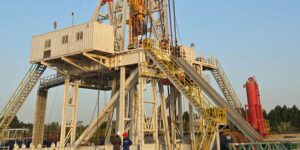
Kenya has taken a decisive step toward commercial oil production. The country has acquired an onshore drilling rig worth Ksh1.9 billion. The equipment will support drilling in the South Lokichar Basin in Turkana County.
Gulf Energy E&P BV announced the deal. The company contracted the GW70 rig under a long-term lease arrangement. The rig comes from the United Arab Emirates.
Officials expect the machine to accelerate Kenya’s first oil plans. The government targets first oil by the end of the year.
Deal with UAE Drilling Company
Gulf Energy secured the GW70 rig from Great Wall Drilling Company. The firm operates in the Middle East energy sector. It has handled major assignments in Abu Dhabi.
The rig delivers 1,500 horsepower. That capacity supports deep and complex onshore drilling operations. Engineers say the machine meets modern safety and efficiency standards.
The rig will arrive in Kenya before June. Technical teams will conduct commissioning and acceptance checks. Drilling operations will begin in early July if inspections proceed smoothly. Gulf Energy described the lease as strategic. The firm said the arrangement ensures flexibility and cost control.
The government wants to deliver Kenya’s first commercial oil this year. Leaders view the project as a historic milestone. Officials believe oil production will reshape the country’s energy landscape.
The acquisition of the GW70 rig strengthens that ambition. The equipment allows continuous drilling without heavy reliance on foreign contractors.
Kenya has pursued oil development for over a decade. Policymakers now push for execution instead of exploration delays.
High-Level Inspection in Abu Dhabi
A Kenyan delegation traveled to Abu Dhabi to inspect the rig. The team included officials from the State Department for Petroleum. Representatives from the Energy and Petroleum Regulatory Authority joined the visit. Turkana County officials also participated.
The delegation reviewed technical performance records. They assessed operational safety standards. They examined maintenance logs and engineering specifications.
Officials expressed confidence after the inspection. They said the rig shows a strong operational track record.
The machine has supported projects for the Abu Dhabi National Oil Company. Industry observers regard ADNOC as a major energy producer in the Gulf region.
Project Scale and Investment
The South Lokichar Basin development carries a projected cost of Ksh774.1 billion. That equals about USD 6 billion. Gulf Energy plans to invest heavily in infrastructure and machinery.
The company will also invest in human capital. Engineers, technicians, and local workers will receive training. Officials say the project will generate employment opportunities in Turkana.
Infrastructure plans include storage facilities and transport networks. Road upgrades and pipeline development will support crude movement.
The government expects the oil project to stimulate economic activity in northern Kenya. Leaders argue that oil revenues can fund development projects.
Revenue Projections and Economic Impact
Treasury projections estimate earnings between Ksh135.3 billion and Ksh374.4 billion during exploration and early production. Officials caution that revenue depends on global oil prices. Oil markets fluctuate frequently. Price swings could affect Kenya’s income expectations. Policymakers therefore stress fiscal discipline.
Kenya will share oil proceeds under the Petroleum Act. The law outlines revenue allocation between the local community, Turkana County, and the national government. Local leaders in Turkana demand transparency. They want fair compensation and development benefits. National officials promise compliance with the legal framework.
Initial estimates from Tullow Oil placed recoverable reserves at about 560 million barrels. Tullow discovered oil in the basin in 2012 at the Ngamia-1 well. That discovery triggered sustained exploration.
Geologists estimate oil initially in place could reach 4 billion barrels. However, only a portion remains technically and economically recoverable. Extraction depends on technology, infrastructure, and price conditions.
Engineers must balance drilling costs with projected returns. Commercial viability requires efficient operations and stable market conditions.
Strategic Importance for Kenya
Kenya aims to reduce energy import dependence. Domestic oil production could lower foreign exchange pressure. Leaders also view oil as a tool for industrial growth. The South Lokichar Basin represents Kenya’s most advanced onshore oil asset. Success there could attract further exploration investment.
Critics warn against overreliance on fossil fuels. They urge the government to balance oil production with renewable energy expansion. Supporters argue that oil revenue can finance green transitions.
The project therefore sits at the center of economic and environmental debate. The rig will land in Kenya before June. Engineers will complete testing and certification. Drilling should start in early July if timelines hold.
Gulf Energy must coordinate with regulators and county authorities. The Energy and Petroleum Regulatory Authority will oversee compliance. Environmental safeguards will guide operations.
The government must also manage community expectations. Residents in Turkana expect tangible benefits. Transparent communication will remain critical.
Kenya now stands at a decisive stage in its oil journey. The acquisition of the GW70 rig signals readiness for commercial production. Execution will determine whether the country meets its ambitious first oil target.
About The Author

